


NEWS & INSIGHTS
Chemical Industry Updates & Company News
Ferroalloys Procurement Guide: How Manganese vs. Silicon vs. Chromium Ferroalloys Impact Steel Strength, Cost, and Slag Formation in EAF Operations
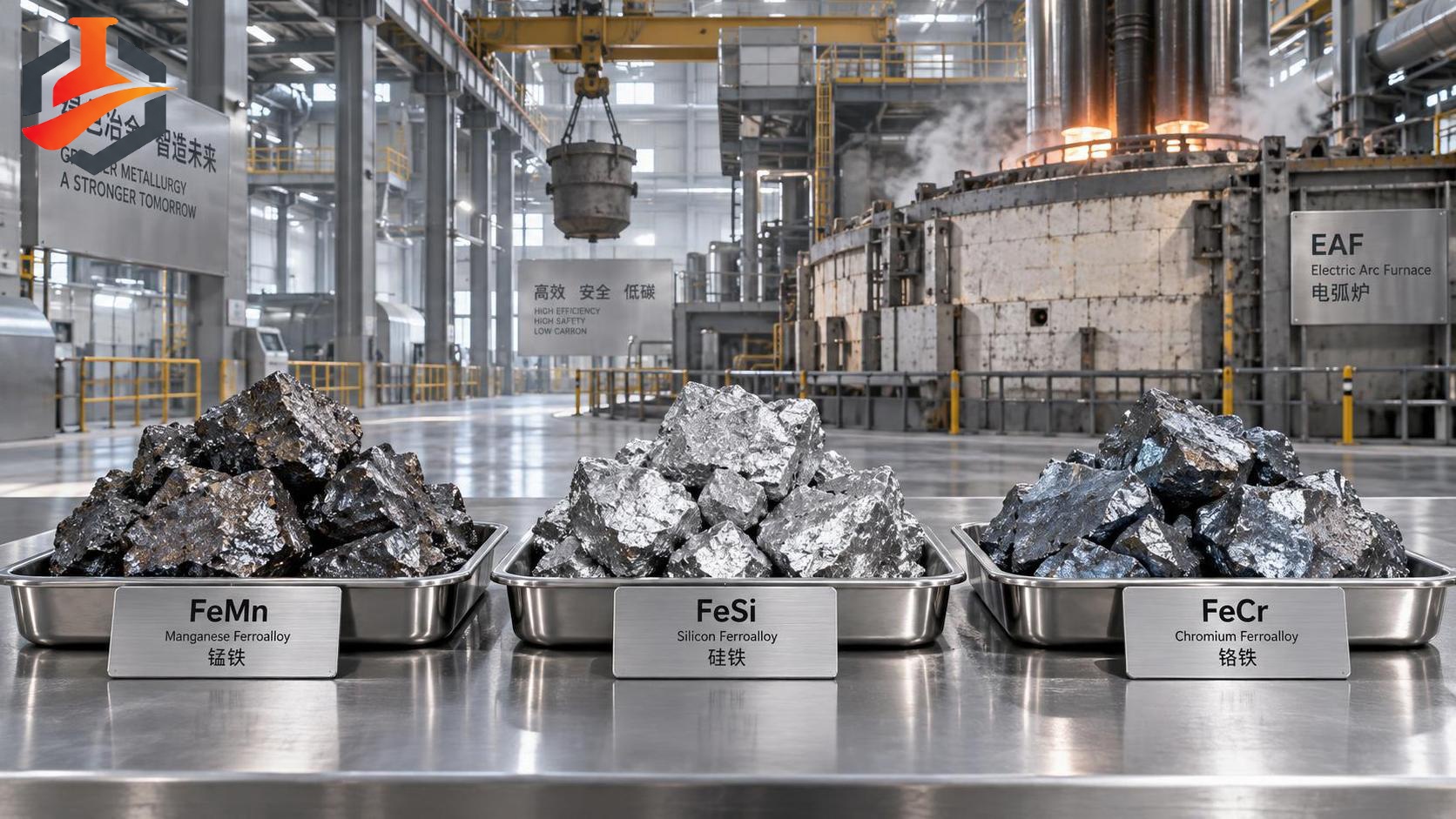
Picture this: It’s Tuesday morning. Your EAF batch is scheduled for 10:30 a.m., but the slag is too viscous—again. The manganese ferroalloy shipment arrived late last week, and now your supplier’s silicon ferroalloy quote just jumped 12% on short notice. You’re not just choosing an alloy; you’re balancing metallurgical outcomes against cash flow, delivery risk, and furnace uptime. For procurement professionals sourcing ferroalloys, decisions rarely hinge on chemistry alone. They hinge on how each material behaves—not just in the ladle, but across your entire operational rhythm.
Why “Just Another Alloy” Isn’t an Option Anymore
In today’s volatile raw materials landscape, ferroalloys aren’t line items—they’re leverage points. Manganese, silicon, and chromium ferroalloys each play distinct, non-interchangeable roles in steelmaking. Yet many procurement teams still evaluate them through siloed lenses: cost per tonne, or spec compliance, or historical supplier reliability. That approach misses the downstream ripple effects—the way a 0.5% excess silicon alters slag basicity, how chromium’s oxidation kinetics shift tap-to-tap time, or why manganese’s recovery rate can swing your effective alloy cost by ±8% depending on scrap composition.
This isn’t theoretical. In EAF operations—where scrap variability, power constraints, and rapid cycle times amplify every input decision—ferroalloys directly shape three critical levers: mechanical strength consistency, total landed cost (not just invoice price), and slag behavior that dictates refractory life, dephosphorization efficiency, and even dust handling.
Manganese Ferroalloys: The Strength Anchor—and Hidden Cost Multiplier
Manganese ferroalloys (FeMn) are often the first call for deoxidation and strengthening. But their impact goes deeper than tensile yield. High-carbon FeMn delivers Mn efficiently—but its carbon content feeds into final steel carbon balance, potentially triggering costly reblowing or trimming. Low-carbon variants avoid that, yet they demand higher addition rates and carry premium pricing. More quietly, Mn’s affinity for sulfur means it influences sulfide inclusion morphology—critical for fatigue resistance in automotive or pipeline steels.
From a procurement standpoint, FeMn’s biggest cost driver isn’t the alloy itself—it’s recovery volatility. Recovery rates fluctuate between 75–92%, depending on bath temperature, slag oxygen potential, and scrap cleanliness. If your scrap mix shifts toward heavier oxidized turnings, expect lower Mn pickup—and higher effective cost per kg of retained Mn. Smart sourcing here means aligning with suppliers who provide batch-specific recovery data—not just guaranteed assay—and who offer flexibility to adjust grade (e.g., switching from HC to MC) based on real-time scrap analysis.
Silicon Ferroalloys: Slag Architect, Not Just Deoxidizer
Silicon ferroalloys (FeSi) don’t just remove oxygen—they engineer the slag. SiO₂ generation from FeSi directly affects slag viscosity, melting point, and basicity (CaO/SiO₂ ratio). Too little Si? Slag stays too basic, risking refractory attack and poor phosphorus removal. Too much? Viscosity spikes, trapping inclusions and slowing tapping. And unlike Mn or Cr, silicon’s oxidation is exothermic—meaning FeSi additions influence thermal balance during meltdown, especially in low-power or long-dwell cycles.
Procurement implications are subtle but consequential. Standard FeSi 75% may be cheaper per tonne, but if your slag system runs lean on CaO, you’ll need more lime—and more energy—to compensate. A higher-Si variant (e.g., FeSi 90%) reduces lime consumption and improves fluidity, but increases Si carryover risk in low-Si grades. The smarter play isn’t lowest price—it’s matching FeSi grade to your typical slag recipe and scrap oxide load. Some forward-thinking buyers now co-source FeSi and lime under shared quality KPIs—because slag performance isn’t siloed; it’s systemic.
Chromium Ferroalloys: Precision Tooling for Corrosion Resistance—With Operational Trade-Offs
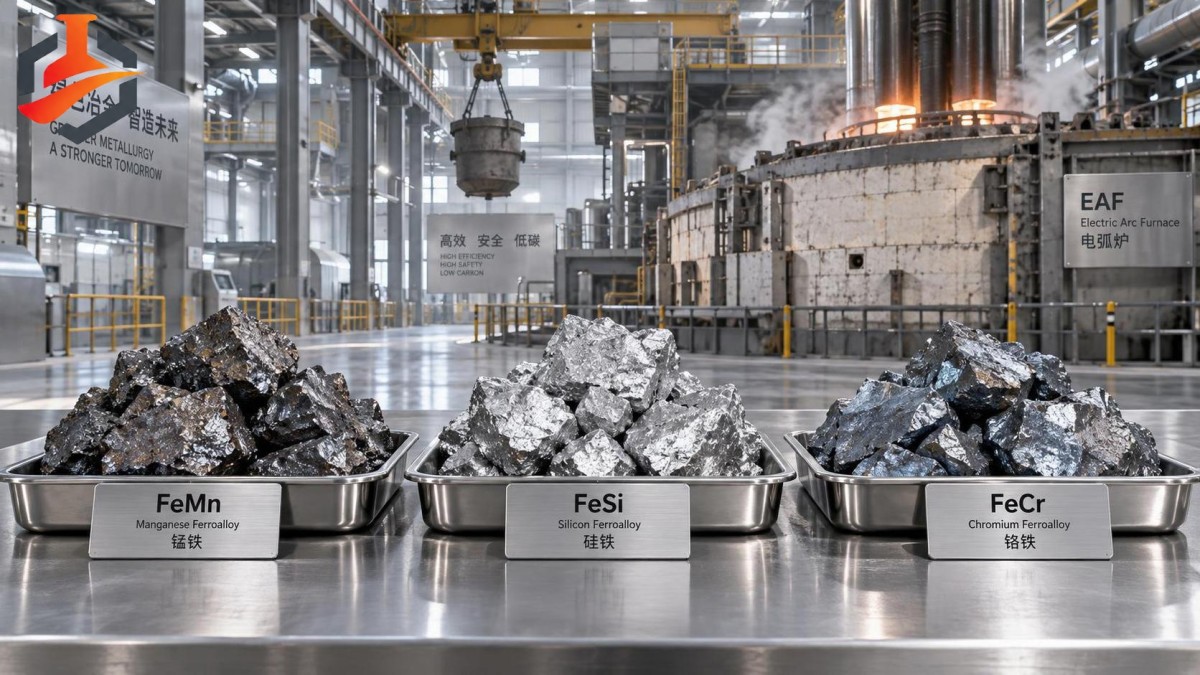
Chromium ferroalloys (FeCr) deliver corrosion resistance—but at a steep operational cost. Unlike Mn or Si, Cr oxidizes readily above 1600°C and forms stable spinels (e.g., MgCr₂O₄) that accumulate in slag. These spinels increase slag density and reduce fluidity, accelerating refractory wear—especially in sidewalls and tap holes. Worse, Cr recovery drops sharply when slag becomes too oxidizing or too basic. That means your actual Cr uptake may sit 10–15% below theoretical, forcing over-addition and inflating cost.
Procurement teams often overlook timing. Adding FeCr early—during meltdown—maximizes recovery but risks excessive oxidation and slag contamination. Adding late—during refining—improves yield but demands precise temperature control and tight scheduling. The best contracts now include clauses for real-time slag monitoring support (e.g., slag sampling protocols, optical basicity estimates) so buyers and suppliers jointly optimize addition windows—not just material specs.
The Real Procurement Equation: Beyond Per-Tonne Price
So what does “smart sourcing” actually look like for ferroalloys in EAF environments?
- Look at cost per retained kilogram—not per delivered tonne. Factor in average recovery, assay variance, and required over-addition buffers.
- Treat slag as a shared responsibility. Ask suppliers how their alloy chemistry interacts with your typical slag composition—not just whether it meets ASTM A99.
- Map alloy behavior to your operational cadence. Does your EAF run high-speed, low-dwell batches? Then FeSi’s exothermic effect matters more than its assay. Do you run high-scrap, high-oxide campaigns? Then FeMn recovery stability outweighs initial cost.
- Negotiate on functional outcomes—not just specs. Instead of “FeCr 60–65% Cr,” try “guaranteed ≥85% Cr recovery under slag basicity 1.8–2.2.”
It’s also worth noting: blending isn’t always better. Some mills assume mixing FeMn and FeSi pre-alloys simplifies logistics—but inconsistent particle size distribution can cause segregation in feed hoppers, leading to uneven addition and erratic melt chemistry. Single-grade, well-specified ferroalloys—paired with robust feeding calibration—often deliver tighter control than “convenient” blends.
When Trade-Offs Aren’t Compromises—They’re Leverage Points
There’s no universal “best” ferroalloy. There’s only the best fit—for your scrap, your slag, your furnace rhythm, and your cost model. Manganese anchors strength but amplifies recovery risk. Silicon shapes slag but nudges thermal balance. Chromium enables performance but challenges refractory life. Each choice ripples outward: into energy use, labor scheduling, maintenance planning, and even environmental reporting (slag volume affects disposal costs and regulatory classification).
The most effective procurement professionals don’t just compare quotes—they map alloy behavior onto process maps. They ask suppliers not “What’s your spec?” but “How does this behave in a 65% shredded auto scrap + 35% pig iron melt, with lime addition at 45 kg/tonne?” They treat ferroalloys not as commodities, but as calibrated inputs—each with its own kinetic signature, thermodynamic footprint, and operational consequence.
That shift—from transactional buyer to process-integrated partner—doesn’t require new software or expensive consultants. It starts with asking different questions. And recognizing that in EAF steelmaking, the smallest alloy addition can echo all the way to the balance sheet.
- Last One:Why Organic Chemicals Fail in High-Temperature Polymerization: Thermal Degradation Pathways, Stabilizer Selection, and Shelf-Life Optimization TipsSep 14, 2026
- Next Article:Chemical Intermediates for Pharma vs. Agrochemical Synthesis: Purity Requirements, Batch Consistency Testing, and ICH Q7 Compliance ChecklistSep 14, 2026