

NEWS & INSIGHTS
Chemical Industry Updates & Company News
How to Select Water Treatment Chemicals for Municipal vs. Industrial Cooling Towers: Corrosion Control, Scaling Resistance, and Microbial Efficacy Compared
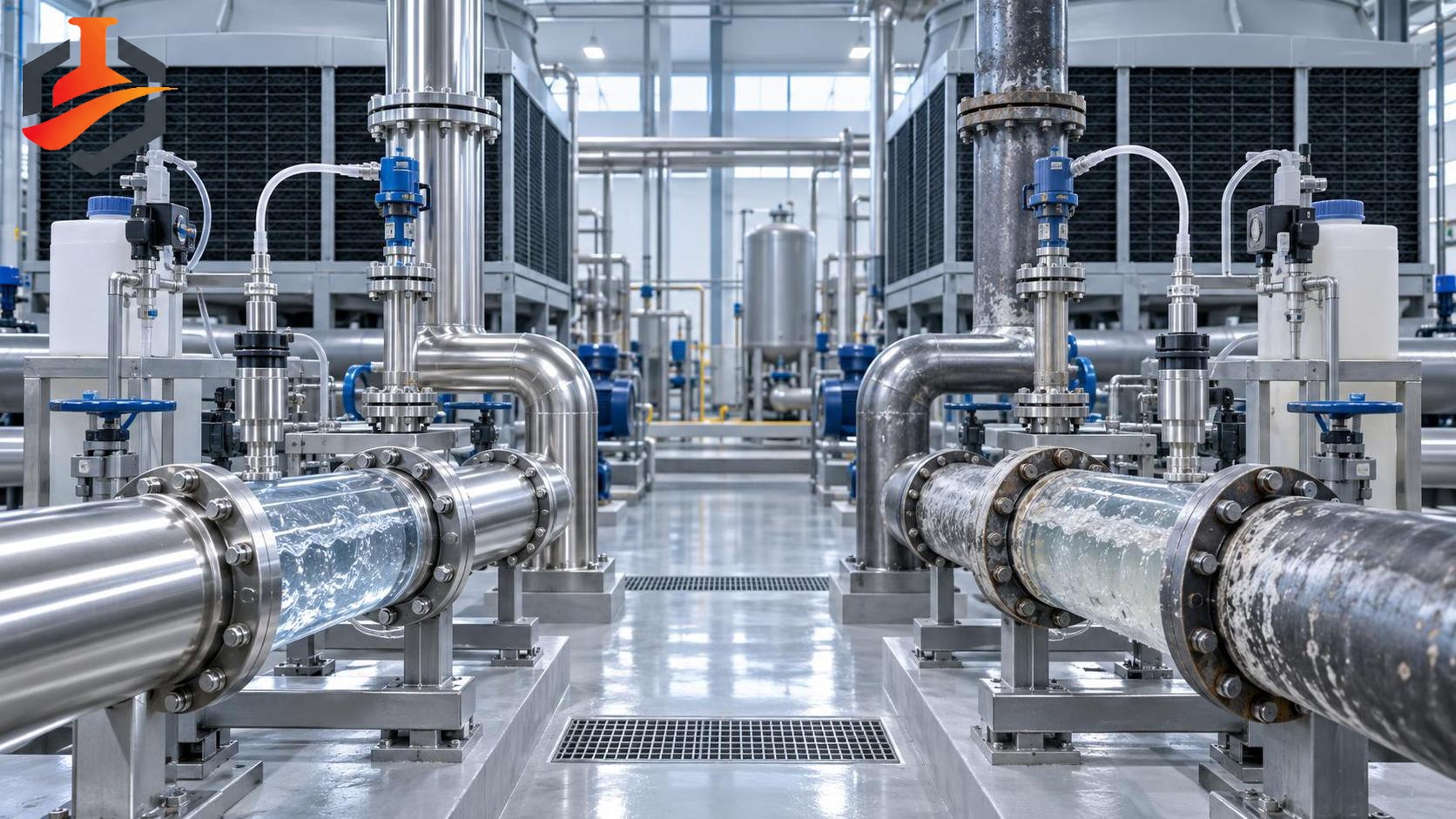
Selecting water treatment chemicals for cooling towers isn’t a matter of preference—it’s a technical specification decision with direct consequences for system longevity, operational uptime, and regulatory compliance. For project managers overseeing municipal or industrial installations, the distinction between these two applications isn’t academic: municipal systems typically operate under stable, low-conductivity, low-hardness water with strict public health mandates; industrial systems often face aggressive water chemistries—high hardness, elevated chloride, variable temperature swings, and organic loading from process contamination. Choosing chemicals optimized for one context but applied in the other risks accelerated corrosion, rapid scale deposition, or ineffective microbial control—even when dosage appears correct on paper.
The core evaluation must focus on three interdependent performance criteria: corrosion inhibition under real-world water chemistry profiles, scaling resistance under thermal and concentration stress, and reliable biocide efficacy against resilient biofilm communities. This comparison does not prescribe universal products. Instead, it outlines how project managers can evaluate chemical formulations against measurable functional boundaries—not marketing claims—to align selection with site-specific hydraulic, chemical, and operational constraints.
Corrosion Control: Matching Inhibitor Chemistry to System Metallurgy and Water Profile
Corrosion protection depends less on total inhibitor concentration and more on the compatibility between inhibitor type, base metal composition, and dissolved ion balance. Municipal cooling towers commonly use copper-nickel alloys or stainless steel in condenser tubes, paired with softened, low-chloride city water. In this environment, film-forming phosphonates (e.g., HEDP, ATMP) combined with low-dose zinc provide predictable passivation—zinc precipitates selectively on cathodic sites without over-depositing in low-ionic-strength water.
Industrial systems, especially in petrochemical or power generation settings, frequently circulate high-chloride, high-sulfate, or high-alkalinity makeup water through carbon steel piping and heat exchangers. Here, zinc-based inhibitors risk solubility loss or localized pitting under oxidizing conditions. Phosphonate-free, high-molecular-weight polymer inhibitors—often incorporating azole derivatives for copper protection and carboxylate groups for iron stabilization—demonstrate greater tolerance to ionic variability and sustained film integrity at elevated temperatures (>45°C).
Key verification step: Review the inhibitor’s published performance data against Langelier Saturation Index (LSI), Ryznar Stability Index (RSI), and aggressive ion ratios (Cl⁻/SO₄²⁻, Cl⁻/HCO₃⁻). A formulation validated only for LSI < +0.5 may fail catastrophically in an industrial tower running at LSI = +2.8.
Scaling Resistance: Thermal Load and Cycles of Concentration Drive Chemistry Choice
Scale formation is governed by supersaturation thresholds—and those thresholds shift with temperature, pH, and cycles of concentration (COC). Municipal systems rarely exceed COC of 4–5 due to blowdown limits and water conservation policies. Calcium carbonate scaling dominates, and threshold inhibitors like polyacrylates or polymaleic acid effectively disrupt crystal nucleation under moderate thermal stress.
Industrial towers routinely operate at COC > 7, especially where makeup water contains >200 ppm Ca²⁺ and >150 ppm alkalinity. At these levels, calcium phosphate, silica, and mixed calcium-magnesium scales become prevalent. Standard polyacrylates lose efficacy above pH 8.5 and fail to stabilize silica beyond 80 ppm. Scale inhibitors requiring higher molecular weight dispersants—such as sulfonated copolymers with controlled hydrolysis rates—are necessary to maintain colloidal suspension of silica and prevent orthophosphate precipitation during high-temperature hold times.
Crucially, scaling resistance isn’t additive. Combining incompatible polymers (e.g., non-sulfonated acrylics with phosphonates) can trigger co-precipitation and worsen fouling. Compatibility testing—per ASTM D7369 or site-specific jar tests—is non-negotiable before full-scale dosing.
Microbial Efficacy: Biofilm Structure Dictates Biocide Selection Strategy
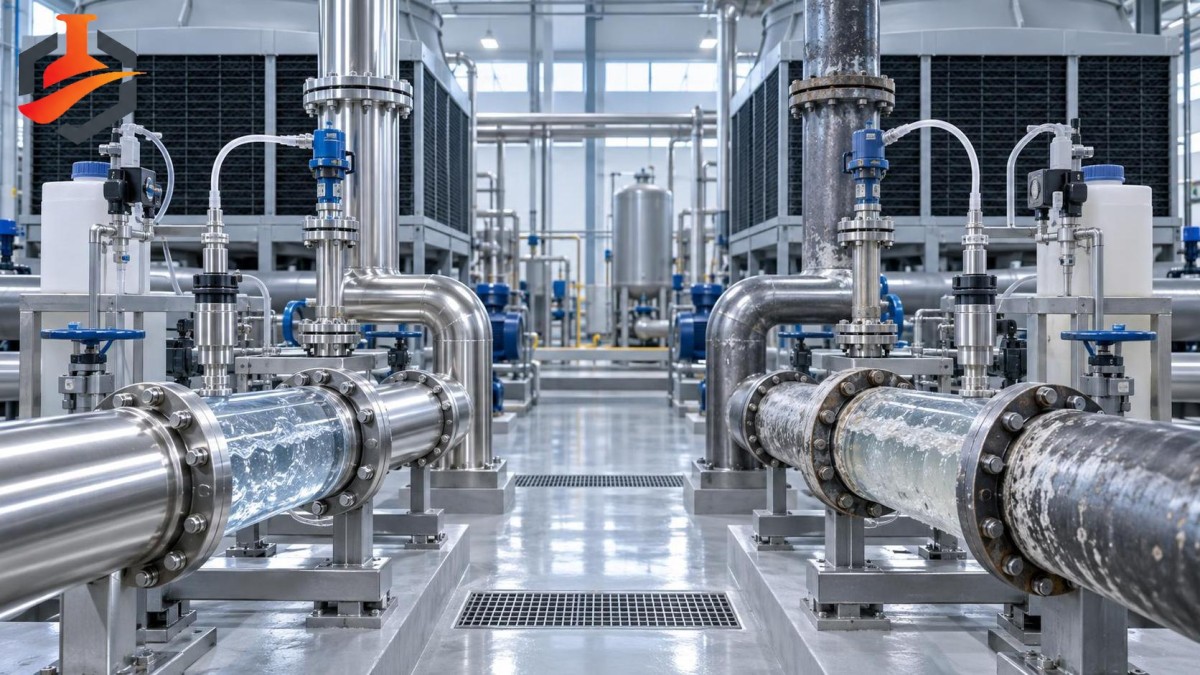
Microbial control differs fundamentally between municipal and industrial environments—not because of pathogen type alone, but because of biofilm maturity, nutrient availability, and system hydraulics. Municipal towers face intermittent Legionella pneumophila exposure, primarily in stagnant low-flow zones. Oxidizing biocides (chlorine, bromine, chlorine dioxide) achieve rapid planktonic kill but penetrate biofilm poorly. Non-oxidizing alternatives like isothiazolinones or DBNPA are used rotationally to disrupt extracellular polymeric substance (EPS) matrices—but their residual effect is short-lived.
Industrial towers accumulate complex, multi-species biofilms enriched with sulfate-reducing bacteria (SRB), iron-oxidizing bacteria (IOB), and heterotrophic plate count (HPC) organisms. These biofilms embed in crevices, under deposits, and within heat exchanger fins. Here, biocide efficacy hinges on diffusion coefficient, membrane permeability, and metabolic targeting. Quaternary ammonium compounds (quats) fail against SRB due to poor anaerobic penetration. Glutaraldehyde remains effective against mature anaerobic biofilms but degrades rapidly above pH 9.0 and reacts with amine-based corrosion inhibitors—making sequential rather than simultaneous dosing essential.
Effective microbial management requires dual-mode strategies: oxidizing biocides for bulk water control, paired with targeted non-oxidizers for biofilm disruption—timed to coincide with periods of reduced flow or scheduled mechanical cleaning.
Decision Framework for Project Managers
Before specifying water treatment chemicals, confirm three baseline parameters:
- Water analysis frequency and scope: Monthly grab samples miss seasonal shifts. Require quarterly full-profile testing—including silica, phosphate, iron, manganese, and heterotrophic plate count—not just hardness and alkalinity.
- System metallurgy mapping: Document pipe, heat exchanger tube, and sump material composition across all zones. Zinc-based inhibitors may corrode aluminum components; certain polymers adsorb onto stainless surfaces and reduce heat transfer.
- Operational envelope validation: Verify maximum expected COC, peak operating temperature, and minimum flow velocity in critical circuits. A chemical validated at 40°C fails if local tube wall temperatures exceed 65°C during summer load peaks.
No single formulation satisfies all municipal and industrial requirements simultaneously. The most robust approach is to treat chemical selection as a boundary-condition problem—not a product catalog exercise. Prioritize third-party performance data tied to your specific water matrix and thermal profile over broad-spectrum claims. When vendor data lacks site-relevant test conditions, request ASTM D4385 (corrosion), ASTM D4696 (scale), or ASTM E2197 (biofilm) reports conducted under matching parameters.
Ultimately, the right water treatment chemicals aren’t chosen for what they promise—they’re selected for what they demonstrably withstand: the corrosion potential of your feedwater, the scaling pressure of your cycles of concentration, and the biofilm resilience of your operating temperature profile.
- Last One:What Are Quaternary Ammonium Compounds? Key Properties, Safety Profiles, and Regulatory Limits for Disinfectant FormulatorsSep 14, 2026
- Next Article:Why Organic Chemicals Fail in High-Temperature Polymerization: Thermal Degradation Pathways, Stabilizer Selection, and Shelf-Life Optimization TipsSep 14, 2026