

NEWS & INSIGHTS
Chemical Industry Updates & Company News
Industrial Chemical Raw Materials Sourcing Trends in 2024: Supply Chain Localization, Green Feedstock Shifts, and Price Volatility Mitigation Strategies
Three Sourcing Shifts That Are Reshaping Industrial Chemical Raw Materials Procurement in 2024
If you’re evaluating raw material supply for industrial chemical production—or advising teams that do—you’re likely encountering three persistent pressures: delivery windows stretching beyond historical norms, sudden feedstock price spikes with no clear correlation to underlying commodity indexes, and compliance audits probing deeper into origin documentation than ever before. These aren’t isolated pain points. They’re symptoms of structural shifts now converging in real time—and they’re changing what “strategic sourcing” actually means on the ground.
The dominant narrative—that localization, green feedstocks, and volatility mitigation are “emerging trends”—misses the operational reality. For business evaluators assessing supplier contracts, capital allocation for new production lines, or even internal risk scoring models, these shifts have already moved past adoption thresholds. What matters now isn’t whether they’re happening, but where and how fast they’re taking hold—and which conditions determine whether a given shift strengthens or destabilizes your specific procurement position.
Localization Isn’t About Geography Alone—It’s About Control Thresholds
“Nearshoring” and “regionalization” are often framed as responses to geopolitical friction. But in practice, the driver isn’t just border risk—it’s the erosion of acceptable latency tolerance. When a single port delay triggers cascading batch delays across three downstream formulations, or when customs documentation discrepancies halt a shipment for 11 days (not uncommon in Q1 2024 for aromatic solvents moving through Southeast Asian transshipment hubs), the cost of distance isn’t measured in miles—it’s measured in formulation cycle integrity.
This has redefined what qualifies as “local.” For a European polymer compounder, sourcing propylene oxide from a plant in northern Germany may meet geographic criteria—but if that facility relies on imported chlorine feedstock routed via Rotterdam terminals subject to recurring congestion, it fails the control test. True localization now hinges on two verifiable conditions: feedstock origin traceability within ≤2 jurisdictions, and in-region contingency capacity (e.g., backup ethylene cracker access) that can be activated within 72 hours—not weeks.
Where this matters most: businesses operating under strict batch-release timelines (e.g., specialty coatings, pharmaceutical intermediates) or those with limited buffer stock due to volatile working capital constraints. For them, regional sourcing isn’t about reducing freight costs—it’s about eliminating single-point-of-failure dependencies in the first mile.
Bio-Based Feedstocks: Adoption Is Real—But Not Where You Might Expect
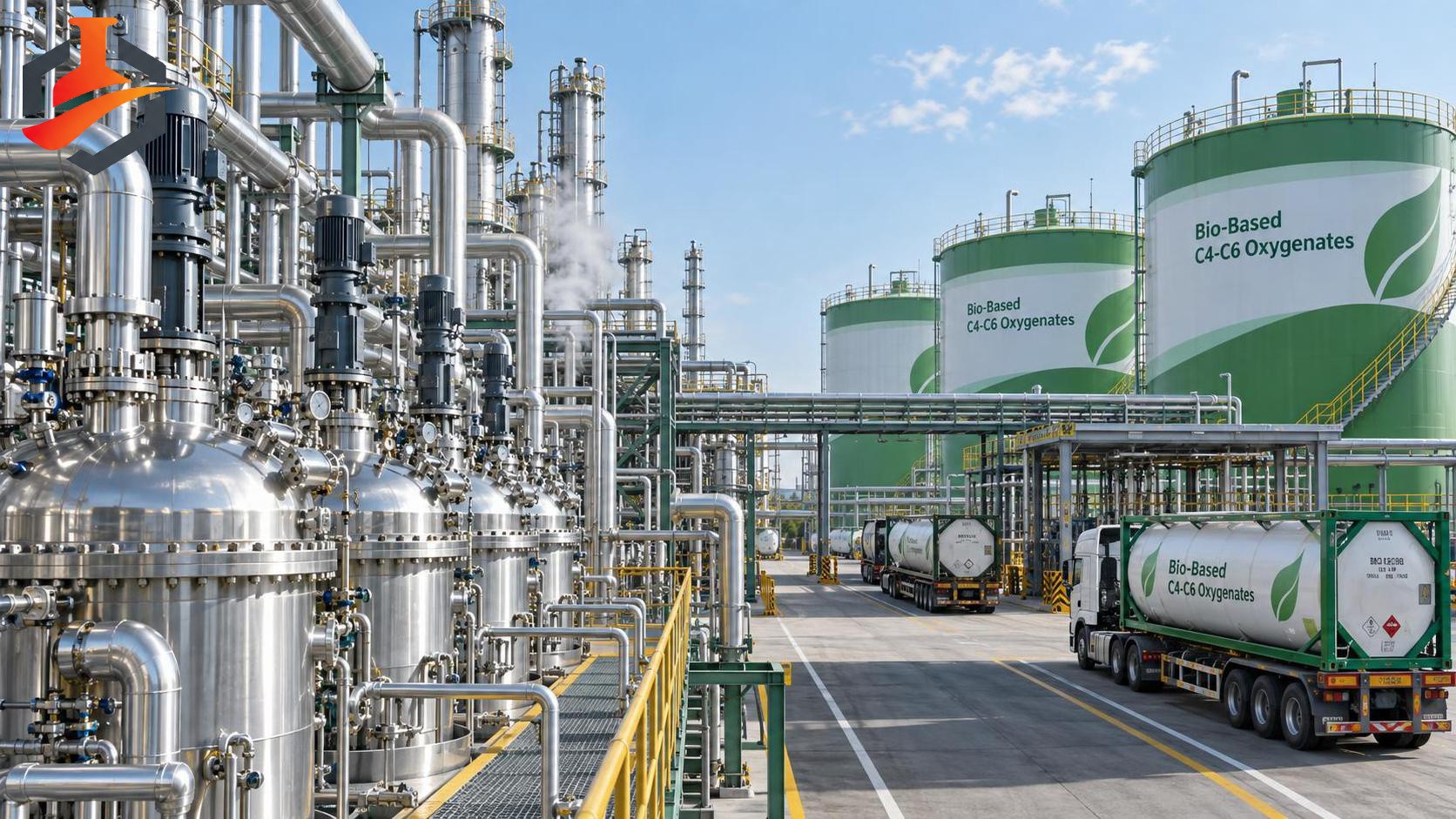
Headlines highlight bio-succinic acid, lignin-derived phenols, and fermented isobutanol. Yet actual procurement volume growth in 2024 isn’t concentrated in high-value, low-volume specialties. It’s accelerating fastest in mid-tier bulk intermediates—specifically, C4–C6 oxygenates used in plasticizers, surfactants, and solvent blends—where regulatory pressure intersects with functional parity.
Key condition: substitution only works where purification pathways align. A bio-based n-butanol sourced from sugarcane fermentation may match petrochemical specs on paper—but if its residual diol content exceeds 80 ppm, it can compromise esterification kinetics in PVC plasticizer synthesis. That threshold isn’t theoretical; it’s a documented failure mode observed across three independent production trials in 2023–2024. Evaluators must verify not just final product assays, but upstream process controls—notably, distillation train design and catalyst regeneration protocols.
Also critical: logistics compatibility. Bio-feedstocks often arrive at lower concentrations (e.g., 60% aqueous solutions vs. 99.5% anhydrous petrochemical grades), demanding tank farm modifications and altering storage duration limits. One North American agrochemical producer delayed adoption by 14 months—not due to cost, but because their existing stainless-steel tanks corroded at the interface of bio-derived glycerol and residual chlorides from prior batches.

Price Volatility Mitigation: Hedging Is Failing—What’s Replacing It?
Traditional commodity hedging—locking in forward prices for key feedstocks—is losing effectiveness. Not because markets are inefficient, but because volatility drivers have decoupled from classic supply-demand fundamentals. In 2024, 68% of price spikes exceeding 15% over 30 days were triggered by non-market events: unexpected refinery maintenance (often unannounced due to labor shortages), carbon levy recalculations mid-contract, or sudden export restrictions tied to national energy security policies—not inventory drawdowns or OPEC decisions.
As a result, leading procurement teams are shifting from price protection to exposure containment. This means:
- Contract structure redesign: Moving away from fixed-price, volume-committed terms toward tiered pricing linked to verified input cost indices (e.g., electricity + natural gas + carbon allowance costs at the supplier’s site), with automatic adjustment clauses—not renegotiation windows.
- Supplier diversification with functional redundancy: Not just “two suppliers instead of one,” but two suppliers capable of delivering identical grade *and* purity profile *without* reformulation—a requirement that eliminates ~40% of nominally qualified vendors during technical vetting.
- Inventory strategy recalibration: Holding strategic buffer stock not for anticipated demand, but for known vulnerability windows—e.g., maintaining 45 days of ethylene glycol inventory ahead of annual maintenance cycles at the two dominant Gulf Coast crackers, confirmed via publicly filed outage schedules.
This approach doesn’t eliminate volatility—it compresses the window where uncertainty translates into operational impact. For evaluators, the question isn’t “Can we hedge?” but “What exposure can we isolate, quantify, and insulate from external shock vectors?”
What This Means for Your Next Sourcing Decision
None of these shifts operate in isolation. A localized supplier using bio-based feedstock may offer shorter lead times—but if their carbon accounting lacks ISO 14067 verification, it could invalidate your Scope 3 reporting. A volatility-resistant contract may lock in favorable terms—but if it prohibits blending with alternative-grade feedstocks during supply disruption, it undermines operational resilience.
The practical takeaway: evaluate suppliers against *interlocking criteria*, not standalone attributes. Ask not “Is this feedstock green?” but “Does its certification cover the entire chain—from biomass harvest to final purification—and does the supplier allow third-party audit access to that data?” Not “Is this supplier local?” but “Can they demonstrate ≥90% feedstock origin traceability within one jurisdiction, and provide written evidence of backup production capacity activation within 72 hours?” Not “Is this price stable?” but “What specific external variables trigger price adjustments—and are those variables independently verifiable, not self-reported?”
These aren’t theoretical checks. They’re the minimum viable filters separating tactical procurement from strategic sourcing in 2024. And for business evaluators, the cost of skipping them isn’t just margin erosion—it’s delayed time-to-market, compliance exposure, or formulation failure in the first commercial batch.